
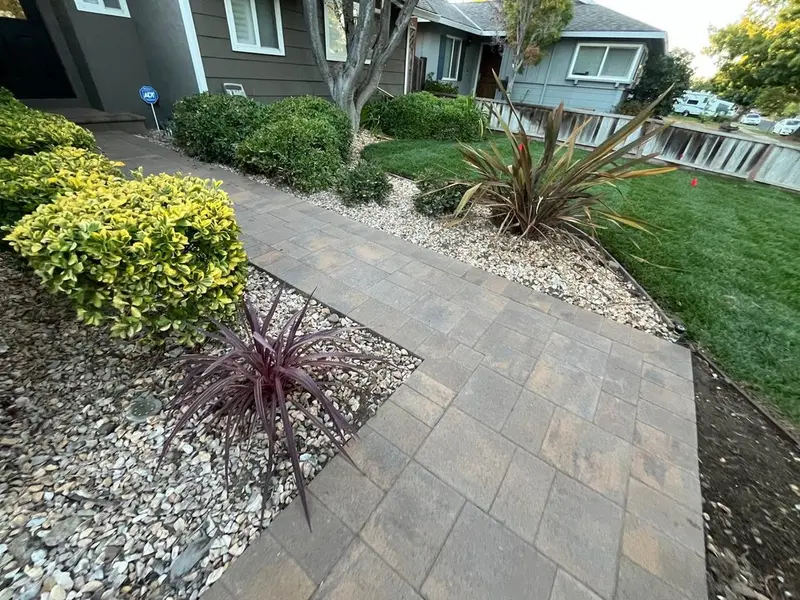
The five things that move a landscape bid
- Removal and grading come first: old lawn, concrete and roots all have to go somewhere.
- Hardscape (patios, walks, walls, steps) is built work; plants and mulch are the lighter part of the bid.
- Irrigation and drainage sit under everything, so they go in before the surfaces, while the ground is open.
- Narrow side yards and no truck access turn machine work into hand work.
- Rebates, permit exemptions and fire-zone rules can change what the right plan is.
What shapes the cost of landscaping in Los Angeles?
Six things set the total. Ask for each as its own line, so you can trade one against another. Time on site matters too: a project that can be completed in a few days by a small team will be less expensive than one that takes weeks or months and requires a larger workforce.
Removal and site prep
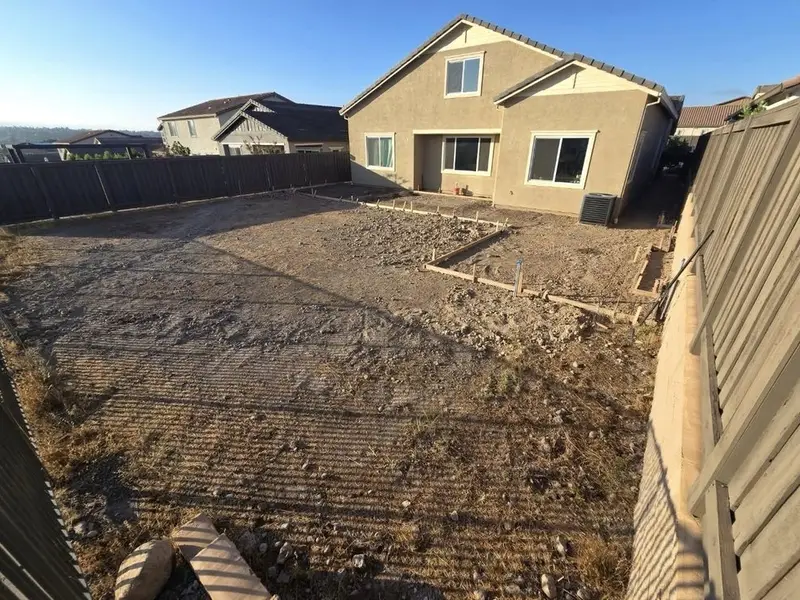
Taking out old lawn, concrete, stumps and roots, hauling it away, then grading the yard so water drains away from the house before anything new goes in.
Hardscape
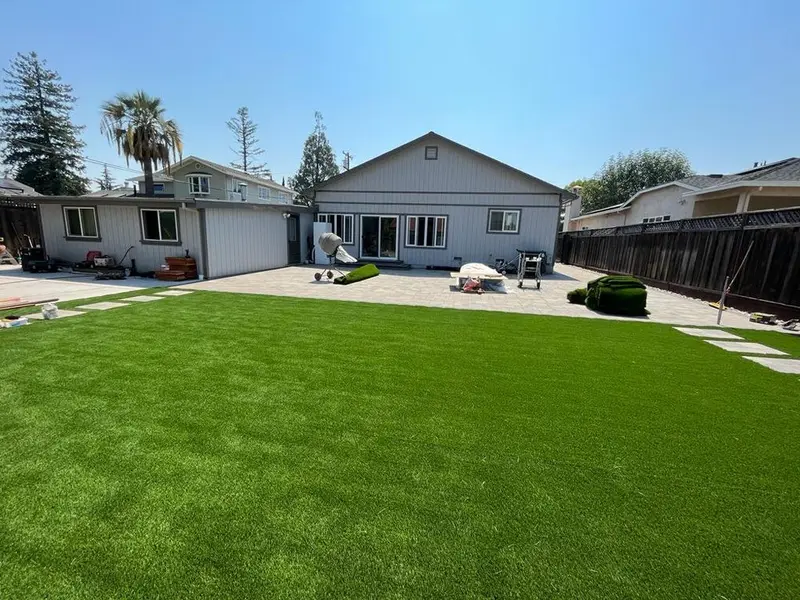
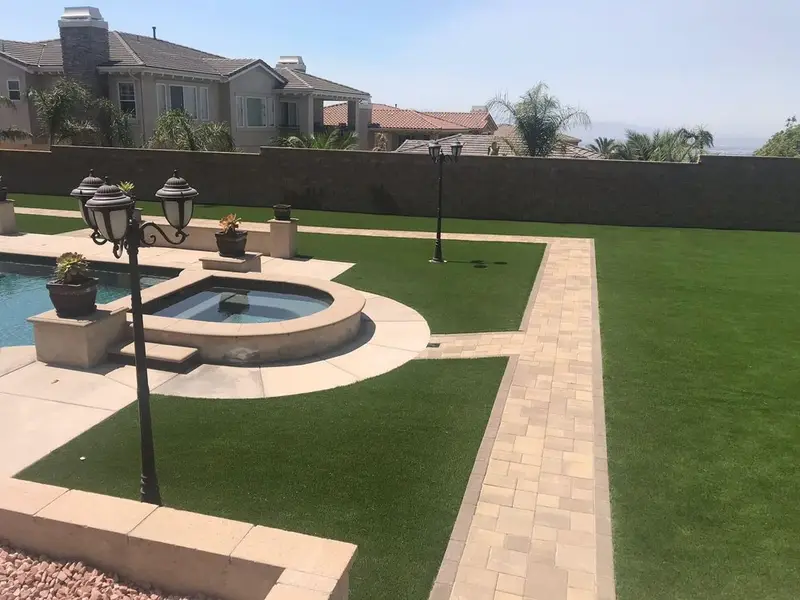
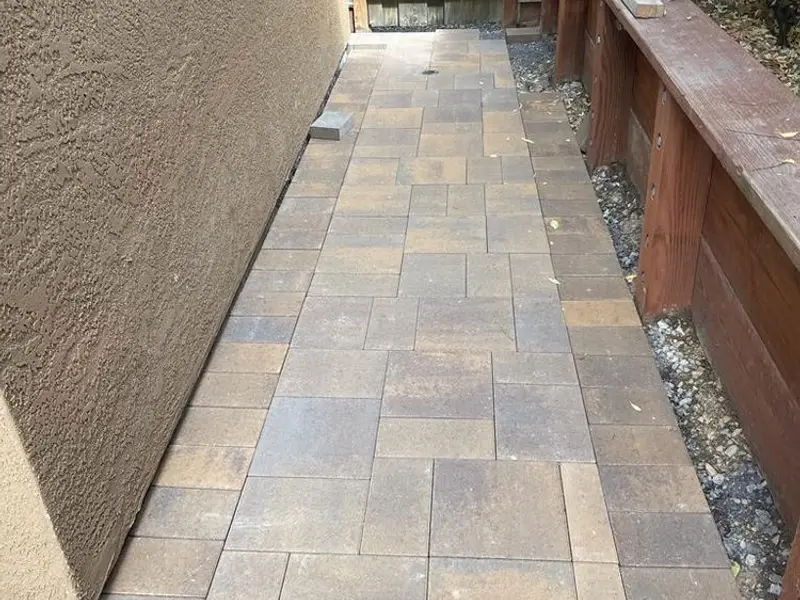
Pavers, concrete, retaining walls, steps and seat walls are built on an excavated, compacted base. Their area and material carry real weight in the total; see our hardscape contractor page for the options.
Irrigation and drainage
Drip lines, spray zones, a controller, and drains or swales that carry roof and yard water away. Sleeves for future lines go under the hardscape before it is laid.
Plants, soil and mulch
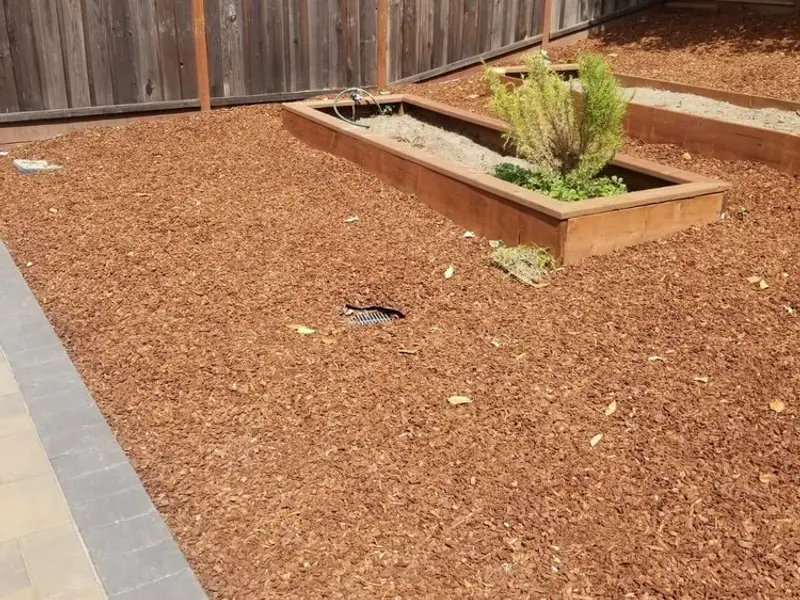
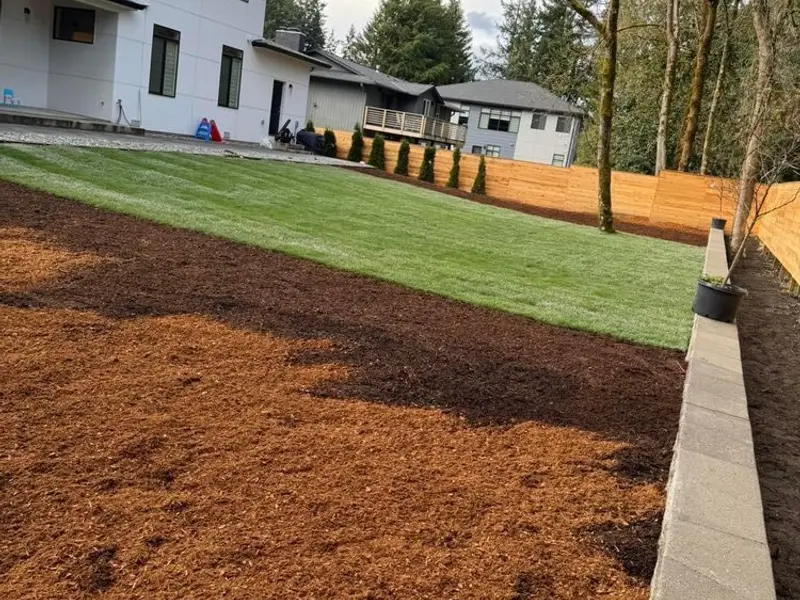
Plant size at planting (a small pot or a boxed tree), soil amendment where the ground is poor, and mulch to hold moisture between plants.
Access
A yard reached only through a narrow side gate means wheelbarrows instead of machines, for demolition, soil, base rock and pavers alike.
Lighting, gas and structures
Line-voltage lighting, a gas line to a fire pit or barbecue, a patio cover or an outdoor kitchen each bring their own trade and, often, a permit.
Lawn, turf or a water-wise garden: three ways to spend the budget
The California Department of Water Resources notes that about 40 percent of the water Californians use at home is used outdoors, so the planting choice affects the water bill for as long as you own the yard.
Renew the lawn
Grading, soil prep, sod or seed and a reworked spray system. A shorter scope than a full redesign, with ongoing water use and mowing.
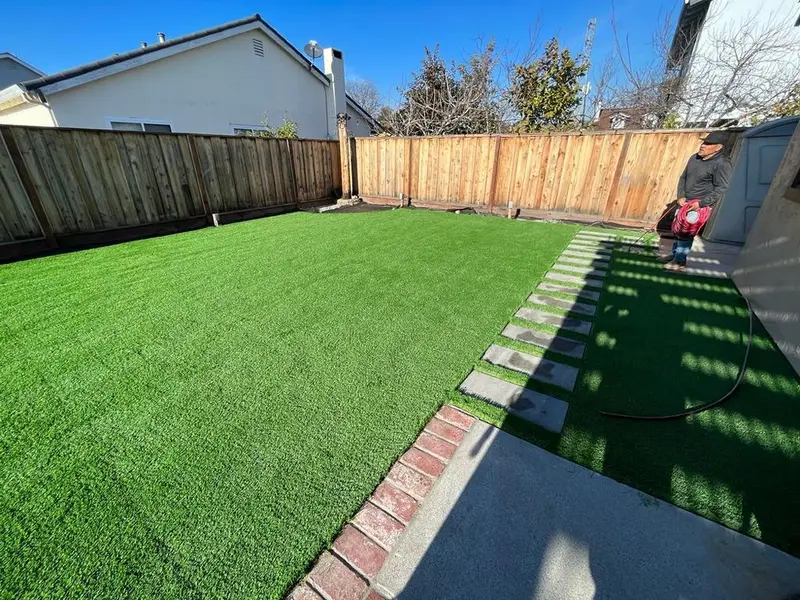
Artificial turf
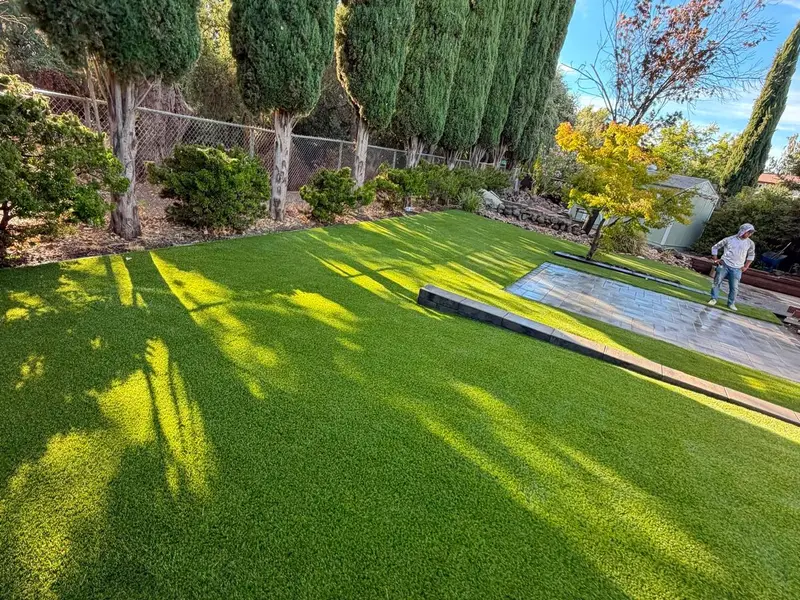
Excavation, a compacted base, drainage and edging under the turf itself. No mowing or irrigation for that area, and it does not qualify for the regional turf replacement rebate.
Water-wise planting with drip
Plants suited to the climate, drip irrigation, mulch and a place for rainwater to soak in. A design that meets the rebate program's rules may earn a rebate for the lawn it replaces.
Rules and programs that change a Los Angeles landscape budget
Turf replacement rebates need approval first
The Metropolitan Water District program run through SoCal Water$mart pays a rebate for replacing lawn, but you must apply and receive approval to proceed before you remove any turf. Each project needs plants (three per 100 square feet of the area converted), a stormwater retention feature, no hardscape in the converted area except permeable hardscape, and replaced or modified overhead spray sprinklers. Synthetic turf is not an approved conversion, and rebate amounts change, so check the program while the design is still on paper.
What can be built without a building permit
The 2025 California Residential Code exempts from a building permit fences up to 7 feet high, retaining walls up to 4 feet from the bottom of the footing to the top of the wall (unless they hold back a surcharge such as a slope or driveway), sidewalks and driveways, and detached decks up to 200 square feet and no more than 30 inches above grade. New electrical, gas and plumbing work still needs its own permit, and cities can amend the list, so check with the building department for your address.
Water-efficient landscape rules
California's Model Water Efficient Landscape Ordinance (MWELO) governs new and retrofitted landscapes, and every local agency must adopt it or a local ordinance at least as effective. When a landscape is part of a permitted project, ask whether your city's version applies, because it sets limits on water use and irrigation design.
Fire hazard zones
In the state responsibility area, Public Resources Code section 4291 requires 100 feet of defensible space around a structure (not beyond the property line), and local ordinances can ask for more. If your address sits in a fire hazard severity zone, plant choice and spacing near the house follow those rules.
How to budget a landscape project in phases
A yard can be built in stages if the stages follow the order of the work. Doing it out of order means tearing up finished surfaces.
Grading and drainage
Water has to leave the house and the yard before anything else is built, and grading is hard to redo once surfaces are in.
Everything underground
Irrigation mains, drains, sleeves under future paving, and conduit or gas lines for lighting, a fire pit or a kitchen, even if those come later.
Hardscape
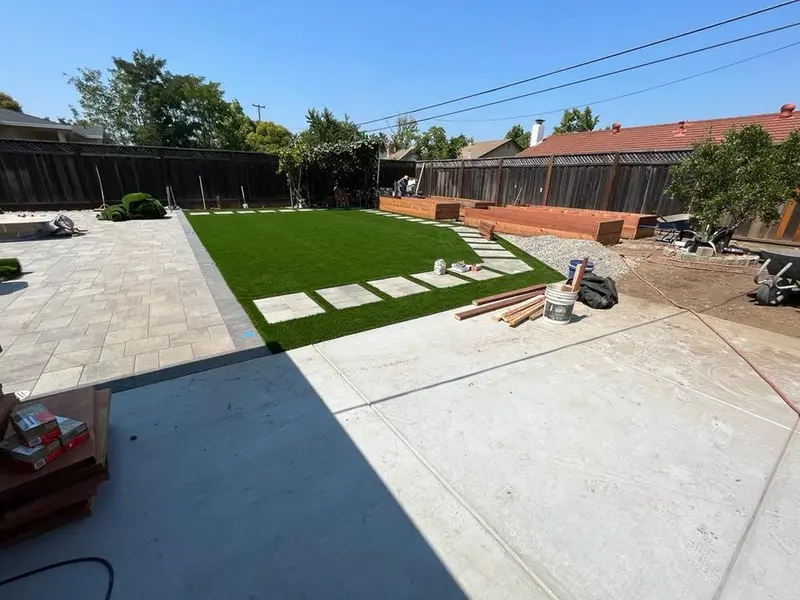
Patios, walks, walls and steps on a proper base. They are the built backbone of the plan, so they come before planting.
Irrigation heads and controller
Drip and spray zones laid out to the final planting plan.
Planting and mulch last
Plants go in when the heavy work is done, so they are not trampled or buried.
Is landscaping worth it?
Landscaping is worth it when the yard becomes a room you use, when it fixes water that pools against the house, or when a thirsty lawn costs more water than you want to spend. It is worth phasing when the budget is tight: grading and the underground work first, the rest later.
We do not quote resale return figures: they depend on the house, the street and the market at the time you sell. The full sequence of a project, from site visit to walkthrough, is in our guide to the landscape design and build process, and the questions to ask before you hire are in how to choose a landscaping contractor in Los Angeles.
Landscaping cost questions
How much does landscaping cost in Los Angeles?
It depends on the yard: the removal and grading it needs, the share of hardscape, the irrigation and drainage, the plants and the access. Because two yards of the same size can need very different work, ask for an itemized bid that prices each of those lines separately.
Is artificial turf cheaper than a water-wise garden?
Not always. Turf needs excavation, a compacted base, drainage and edging, and it does not qualify for the Metropolitan Water District turf replacement rebate, while a planted, drip-irrigated garden that meets the program rules can. Compare both as complete installed scopes, not by the material alone.
Do I need a permit for a retaining wall in Los Angeles?
Not for a low wall that holds back no surcharge: the state code exempts walls up to 4 feet, measured from the bottom of the footing, as listed in the permit section above. A taller wall, or one holding back a slope or driveway, needs a permit; LADBS has the final word inside the City of Los Angeles.
Can I get a rebate for removing my lawn?
Possibly, if you receive the program's approval to proceed before any lawn comes out and the new design meets the planting and drainage rules described above. Artificial turf does not qualify.
Get an itemized landscape bid
Alpha Dream Construction designs and builds yards across Los Angeles County, Orange County and Riverside County under California license CSLB #1145233 (class B, General Building). See our landscaping contractor Los Angeles service, then send us your project details or use the call button on this page.