
Recent kitchen and bathroom remodels
4.8 on Google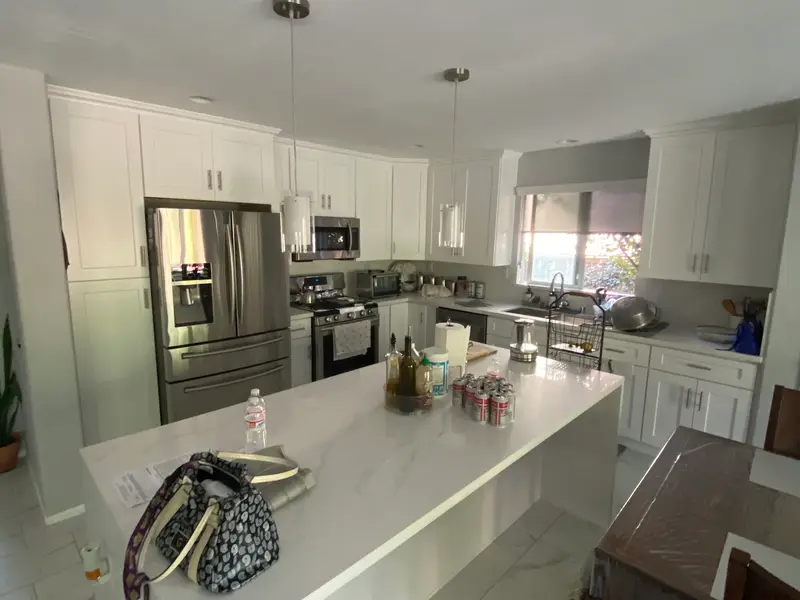
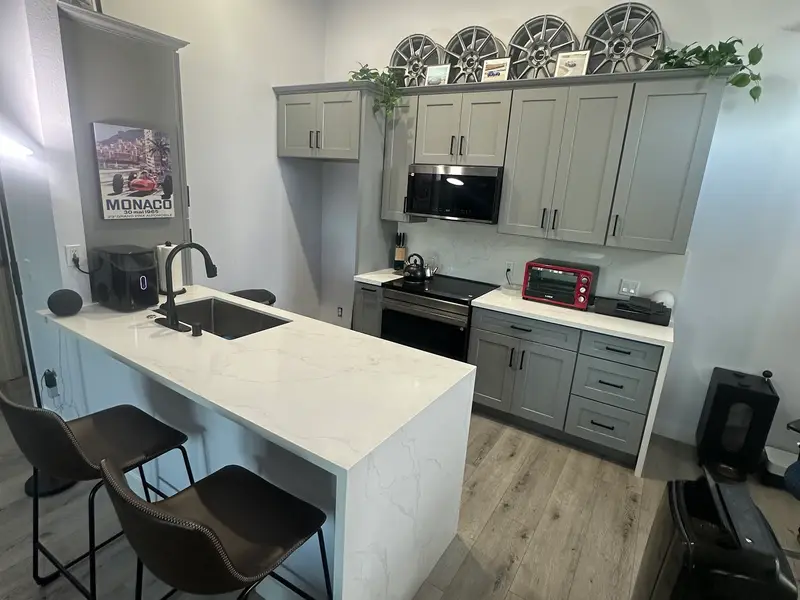
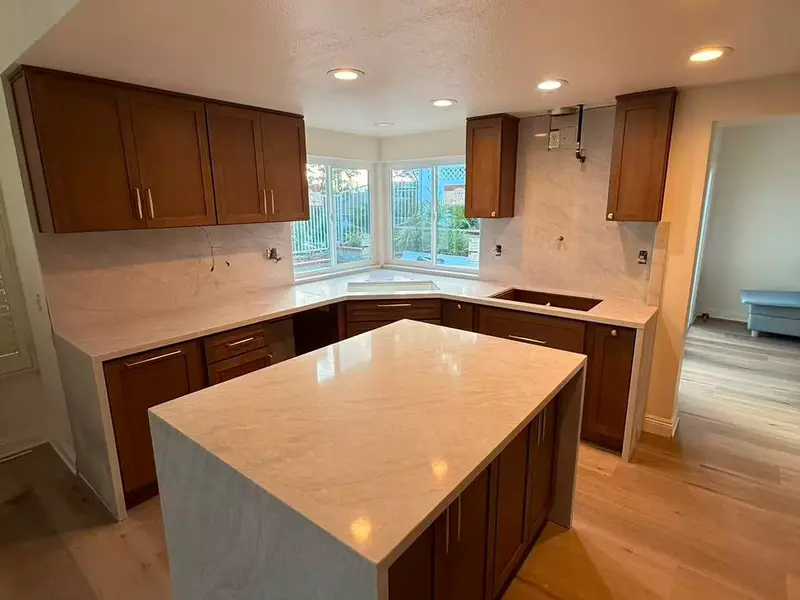
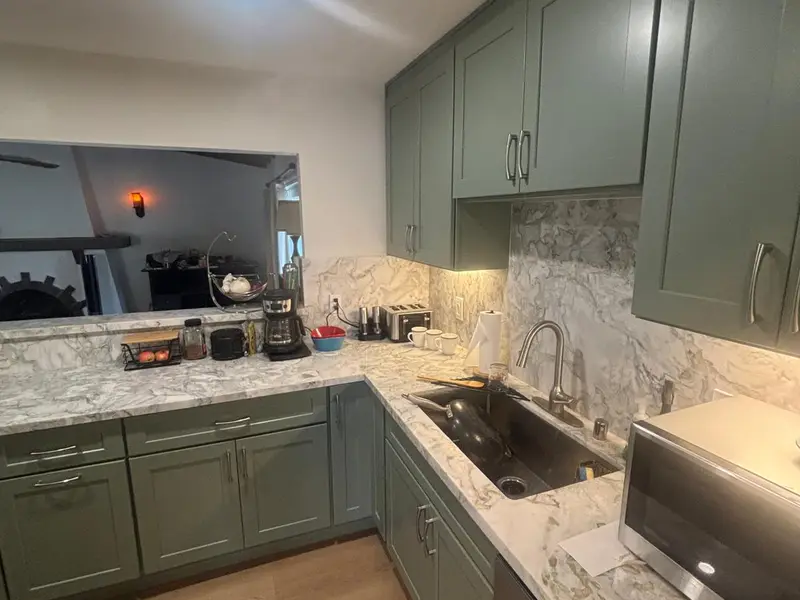
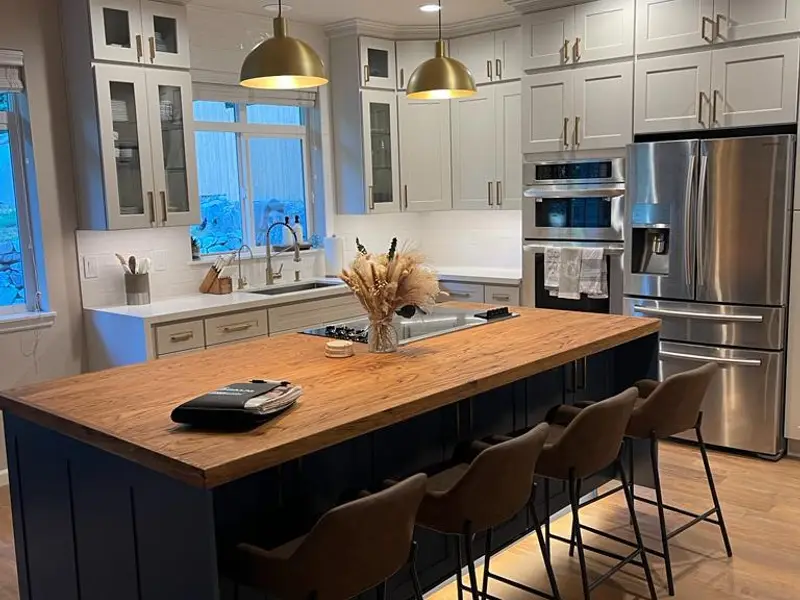
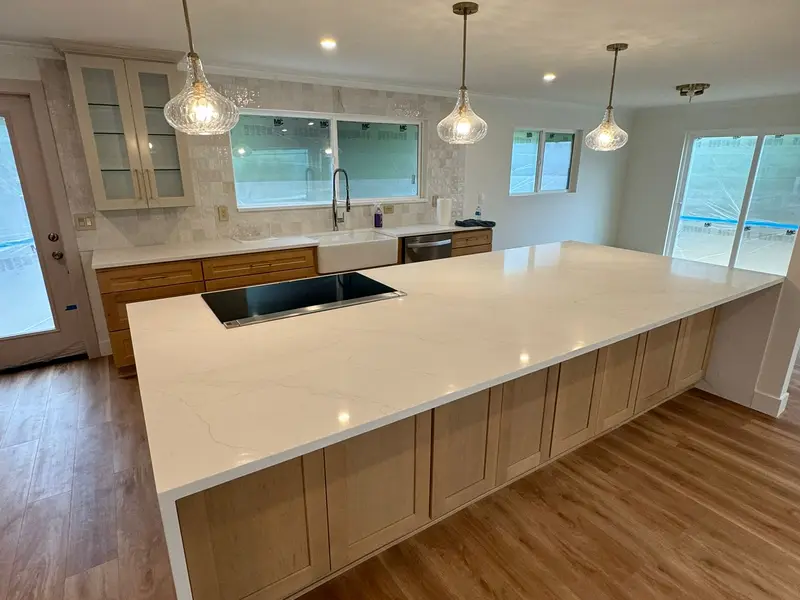
★★★★★Google review"He really understood my vision and was able to see and imagine how my home would look after a full renovation including the kitchen, flooring, paint, and two bathrooms."
Where a Lasting Interior Finish Comes From: the Prep
Paint shows every dent and crack under it, so the work before the first coat decides how the room looks. A thorough interior paint job runs in this order.
Protect the room
Floors, furniture and fixtures are covered, outlet plates come off and edges are taped, so only the walls get paint.
Patch, sand and caulk
Nail holes, dents and cracks are filled and sanded flat, and open gaps along trim and corners are caulked so the lines read clean.
Clean and prime
Kitchen grease and bathroom film are washed off, glossy surfaces are scuffed, and patches, stains and bare drywall get primer so the finish color dries even.
Finish coats and touch-ups
Ceilings first, then walls, then trim and doors, with as many finish coats as the color and surface need, and a last look in good light for touch-ups.
Which Paint Sheen Goes in Which Room?
Sheen is how much the paint shines. More shine is easier to wipe clean but shows every flaw in the wall.
Flat or matte
Hides bumps and patches well but marks more easily. Suited to ceilings and to bedrooms or formal rooms that are rarely touched.
Eggshell
A soft glow that stands up to light cleaning; a common choice for living rooms, hallways and family rooms.
Satin
A little more shine and washability, for kids' rooms, laundry rooms and busy hallways.
Semi-gloss
Hard and wipeable, for kitchens, bathrooms, trim and doors, where moisture and hands hit the paint, as in a bathroom remodel.
Lead Paint, Low-VOC Rules and Permits
Homes built before 1978
The EPA's Renovation, Repair and Painting Rule applies to paid work that disturbs paint in housing built before 1978: the firm must be certified and follow lead-safe practices.
What counts as minor
Work that disturbs 6 square feet or less of paint per room inside is outside the rule, but window replacement and demolition are always covered and prohibited practices stay prohibited. Components declared lead-free by a certified inspector or risk assessor are outside it.
VOC limits in Southern California
South Coast AQMD Rule 1113 limits the VOC content of paints and coatings supplied, sold or used across large parts of Los Angeles, Orange and Riverside counties.
No permit for paint
Painting, papering, tiling and similar finish work are exempt from a building permit under the 2025 California Residential Code (section R105.2); each city applies it with its own amendments. Moving walls, wiring or plumbing is not exempt; that is interior remodeling.
How to Choose Interior Paint Colors That Work
Test on the wall
Paint large samples on two or three walls of the room. A chip in the store looks different from a whole wall in your own light.
Look morning and evening
North light tends to cool colors and west light warms them late in the day; check the samples at the times you use the room.
Watch the undertone
Grays and whites lean blue, green or yellow. Hold samples against the floor, counters and cabinets that stay.
Read the LRV
Most paint chips list a light reflectance value (LRV) from 0 to 100: the higher it is, the more light the color bounces back, which matters in a dark hallway or a north room.
What Do Interior Painters Charge For?
Painting quotes often differ in how much work they include, so compare these lines instead of the total alone.
Area and height
Wall and ceiling area, tall or vaulted ceilings and stairwells that need scaffolding.
Wall condition
How much patching and sanding the walls need; in a pre-1978 home, sanding painted walls can bring in the EPA lead-safe practices (see the lead cards above).
Colors and cut lines
Each extra color, accent wall or two-tone room adds edges to cut by hand, and a deep color over a light one can need a tinted primer.
Trim and doors
Baseboards, casings, crown and doors take more time per foot than walls.
Paint line and coats
Which product line, how many finish coats and where primer is included.







Interior Painting Questions
Paint before or after new floors?
Walls and ceilings are best painted before new flooring goes in, so drips cannot land on the new floor; baseboards get their final coat or touch-up after the floor is down.
Can we stay home while you paint?
Often, yes, when the work goes one room at a time. Keep the room being painted closed off and aired out, with windows open while the paint dries; a whole-house repaint or heavy sanding in an older home is the case to plan around.
Do you fix drywall before painting?
Yes. Surface preparation and repairs come first: holes, cracks, water stains and loose tape are fixed and primed before the color goes on.
Is painting part of a larger remodel?
Often. Paint is the last step of a kitchen remodel, a bathroom remodel or a whole-home remodel.
For the outside of the house, see our exterior painting page. To get a room painted, tell us which rooms and colors and book an appointment.