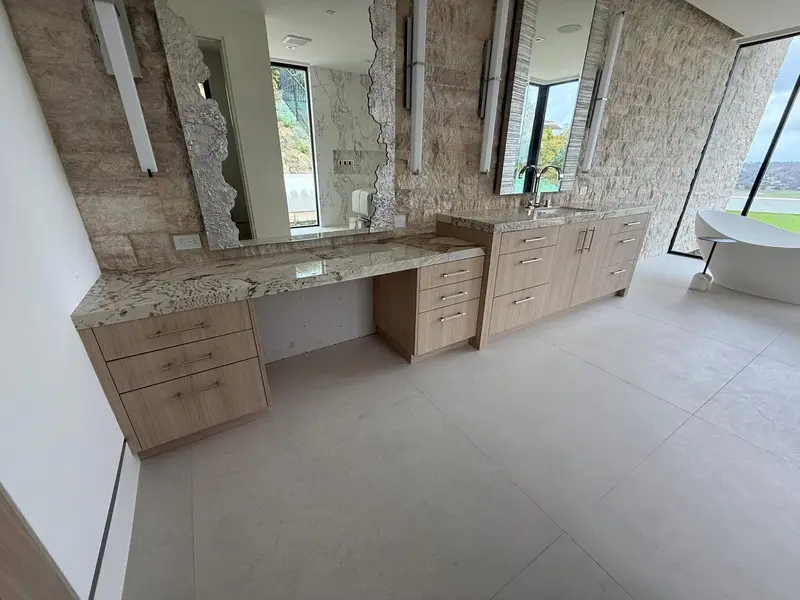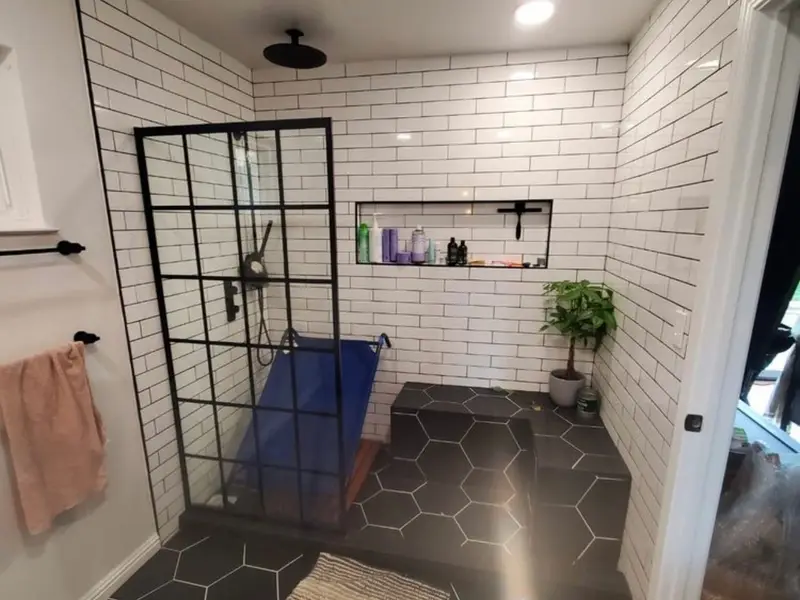
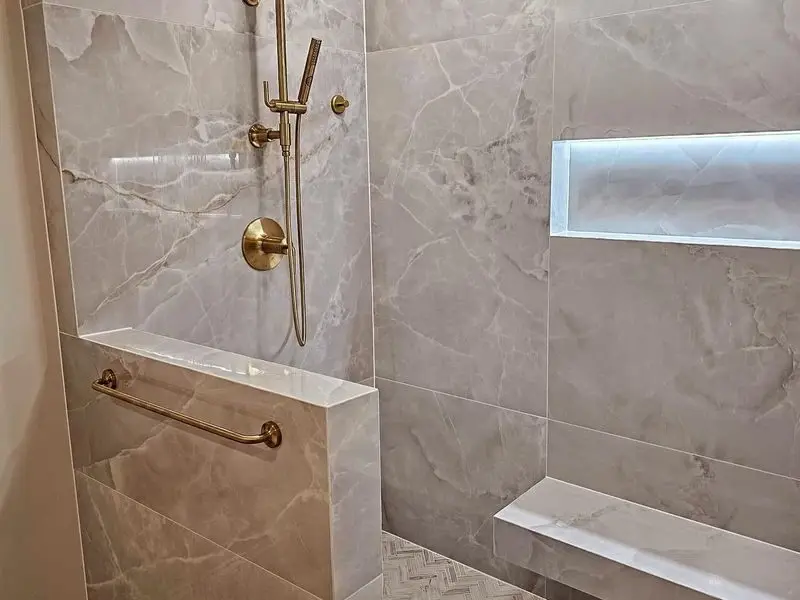
Here is what each line of a bathroom bid pays for, how the scope changes from a guest bath to a primary suite, which California rules add work, when a remodel is worth it, and a budget method that keeps the surprises small.
Key points
- Keeping the toilet, shower drain and sink in place reduces plumbing labor; moving them adds it.
- The shower is where the hidden work sits: the pan, the waterproofing and the glass.
- Tile size, pattern and niches change the labor line, not only the material line.
- A permit on a single-family home built on or before January 1, 1994 brings every noncompliant fixture in the house up to California's water-saving rules.
- An itemized bid on your own room is the number to plan with.
What do you pay for in a bathroom remodel?
A complete bathroom bid has these lines. Asking for each one separately is the quickest way to see where your money goes. The complexity of the job, the duration of the project, and the number of specialists required all contribute to the labor costs.
Demolition and protection
Removing tile, the tub or shower, the vanity and often the drywall to the studs, plus floor protection on the way out and the haul-away.
Plumbing
New valves, supply lines and drains. On a concrete slab, moving a drain means cutting and patching the slab; on a raised foundation the work happens from below.
Shower build and waterproofing
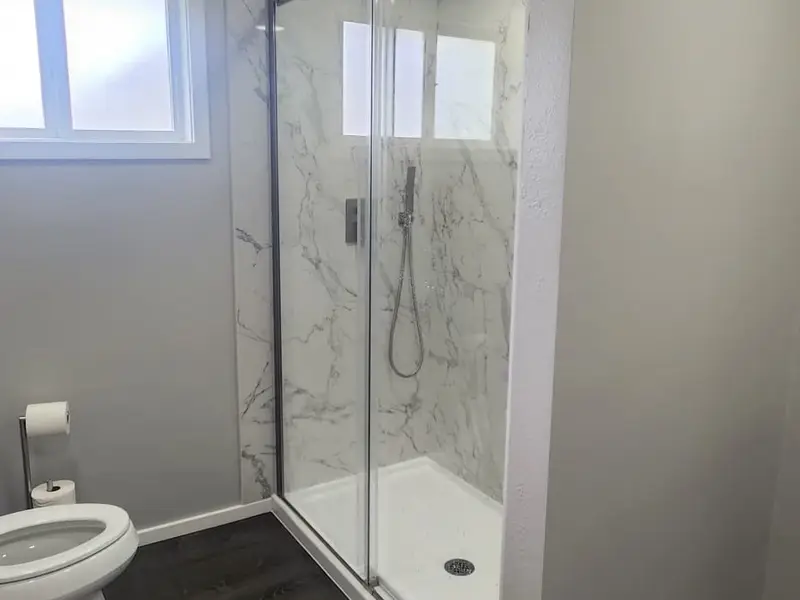
The shower pan or a curbless slope, a waterproof membrane or hot-mop, backer board and a flood test before tile. Glass enclosures are measured and installed after the tile.
Tile
Large-format, mosaic and patterned tile take different labor. Niches, benches, full-height walls and heated floors each add their own work.
Vanity, counters and fixtures
Stock or custom vanity, the counter, the toilet, faucets, showerhead and accessories. Wall-hung pieces need blocking in the wall before it is closed.
Electrical, fan and permit
Lighting, outlets, an exhaust fan ducted to the outside, then the permit, plan check if walls move, and the inspections.
Guest bath, hall bath or primary suite: how the scope changes
The same room can be priced three ways. Name the level when you ask for bids so every contractor prices the same job.
Fixture and surface update
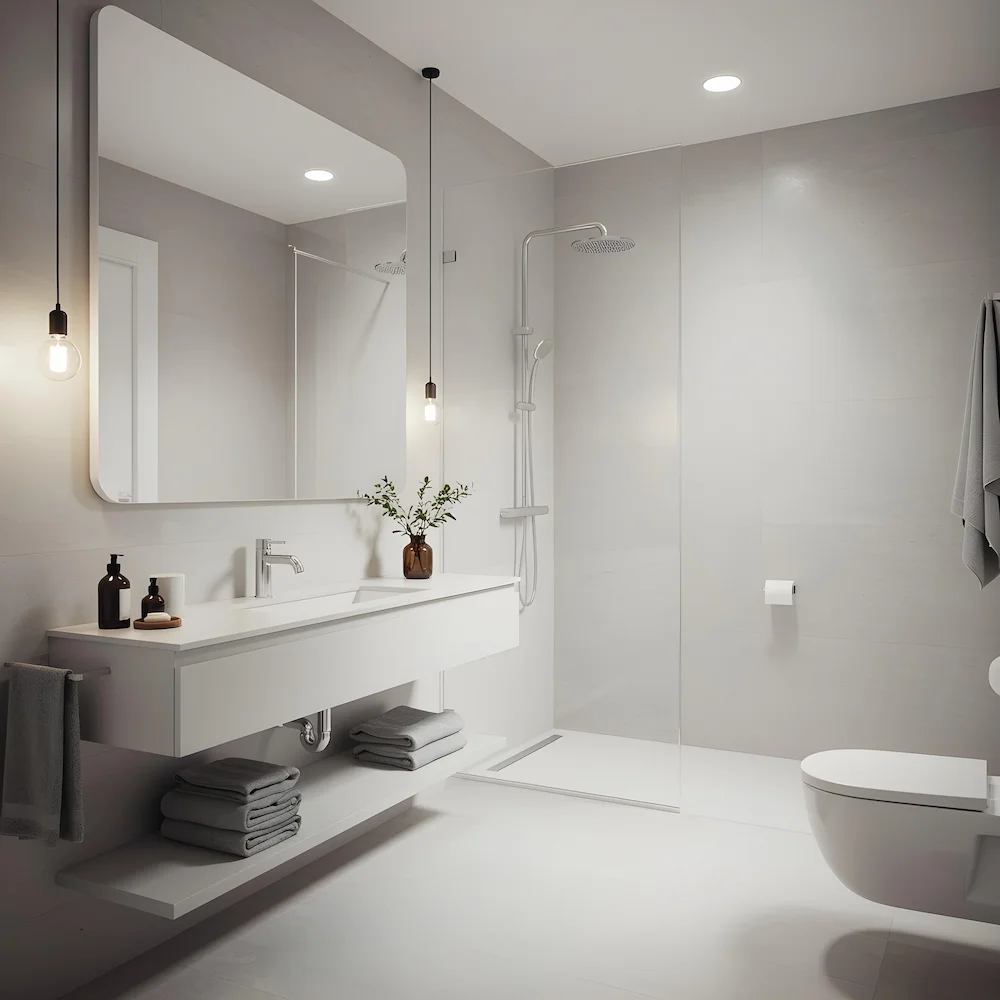
New vanity, toilet, faucets, lighting and paint, with the tile and shower kept. The plumbing stays where it is.
Full remodel, same layout
Everything comes out to the studs and goes back in the same places: new shower or tub, waterproofing, tile, vanity and fixtures.
New layout or a larger room
A tub becomes a walk-in shower, the toilet moves, a second sink is added, or the bathroom takes space from a closet. Drains move, walls may move, and plan check joins the job.
Which California rules add work to a bathroom remodel?
Water-saving fixtures on homes built on or before 1994
California Civil Code section 1101.4 makes final permit approval of an alteration to a single-family home built on or before January 1, 1994 depend on replacing all noncompliant plumbing fixtures in the house: toilets over 1.6 gallons per flush, showerheads over 2.5 gallons per minute and interior faucets over 2.2 gallons per minute. A permit for one bathroom can bring the other bathrooms' fixtures into the scope.
Lead-safe work in homes built before 1978
The EPA's Renovation, Repair and Painting Rule requires a certified firm and lead-safe practices when work disturbs paint in a home built before 1978. Containment and cleanup are part of the bid on those homes.
Asbestos survey in the South Coast AQMD area
Across large areas of Los Angeles, Orange, Riverside and San Bernardino counties, South Coast AQMD Rule 1403 calls for an asbestos survey before renovation work. A single-family home is exempt only when less than 100 square feet of asbestos-containing material is removed.
The permit for your address
LADBS issues permits inside the City of Los Angeles, and cities such as Burbank, Glendale, Pasadena and Santa Monica run their own building departments. For the LADBS side of a tub-to-shower conversion, see our Sherman Oaks bathroom remodel and LADBS guide.
Is a bathroom remodel worth it?
A bathroom remodel is worth it when the room is failing or no longer fits the people who use it. These signs mean water may already be doing damage, and waiting can make the repair larger:
Signs it is time
A soft or springy floor near the toilet or tub, cracked or loose tile, grout that keeps failing, stains on the ceiling below, mildew that returns after cleaning, or a shower valve that cannot hold a steady temperature.
Signs the layout no longer fits
A tub nobody uses, a step-in that is hard on knees, one sink for two people, no storage, or a room that will need grab bars and a curbless shower to stay usable for years.
When the room works and only the surfaces are dated, a fixture and surface update may be all it needs. We do not quote resale return figures: they depend on the house, the neighborhood and the market when you sell.
How to set a bathroom remodel budget
Decide who the bathroom serves
A guest bath, a children's bath and a primary suite need different finishes and storage. That choice sets the level of scope.
Choose tub or shower first
It decides the drain location, the waterproofing method and the glass, so it comes before tile.
Pick tile size and layout early
Large-format slabs, small mosaics and patterns change the labor line, not only the material line.
Get allowances in writing
If the bid carries an allowance for tile or fixtures, ask what it buys, then choose before work starts so it does not become a change order.
Hold a reserve
Plan for at least 10 to 15 percent extra for surprises such as structural issues or material changes. Rotted subfloor or framing can turn up behind old tile.
Planning a kitchen too? The kitchen remodel cost guide covers the drivers of that room, and our checklist on how to choose a bathroom remodeling contractor covers licenses, contracts and red flags.
Bathroom remodel cost questions
How much does a bathroom remodel cost in Los Angeles?
A single figure would not be reliable: the same room can be a fixture swap or a gut remodel with a new layout, and those are different projects. Price your own scope with an itemized bid that lists demolition, plumbing, the shower build, tile, fixtures, electrical and permits on separate lines.
Do I have to move the plumbing to update my bathroom?
Not necessarily. Keeping toilets, sinks, and shower drains in their original locations reduces plumbing labor costs. However, if your current layout feels cramped, reconfiguring the layout is often a worthwhile investment to maximize usability.
Does moving plumbing increase bathroom remodel costs?
Yes, moving plumbing significantly increases bathroom remodel costs because it involves more labor, potential structural modifications, and specialized work by licensed plumbers.
How long does a bathroom remodel take?
A standard guest bathroom remodel generally takes 3 to 5 weeks of active site work, while a full primary suite renovation with custom tile and layout adjustments typically takes 4 to 7 weeks. If it is the only bathroom in the house, plan where the family will shower for that time.
Does a bathroom remodel need a permit in Los Angeles?
Usually, yes. The California Residential Code requires a permit to alter or replace plumbing or electrical systems or to alter the structure, so moving plumbing, changing walls or adding circuits needs one, while finish work such as tiling or a new counter alone is exempt from a building permit. The building department for your address (LADBS inside the City of Los Angeles) has the final word. Our Sherman Oaks guide walks through the LADBS side of a tub-to-shower conversion.
Price your own bathroom
Alpha Dream Construction remodels bathrooms across Los Angeles County, Orange County and Riverside County under California license CSLB #1145233 (class B, General Building). See our bathroom remodel Los Angeles service, then send us your project details or use the call button on this page for an itemized bid.