
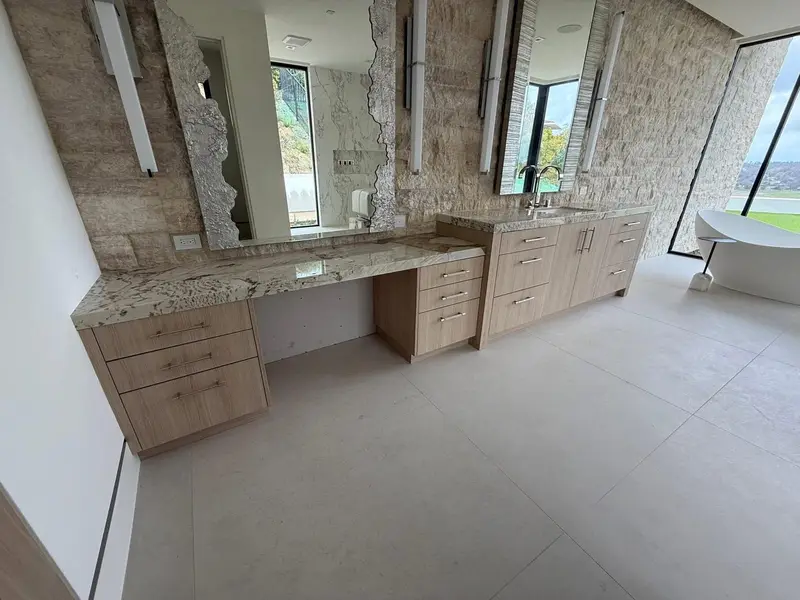
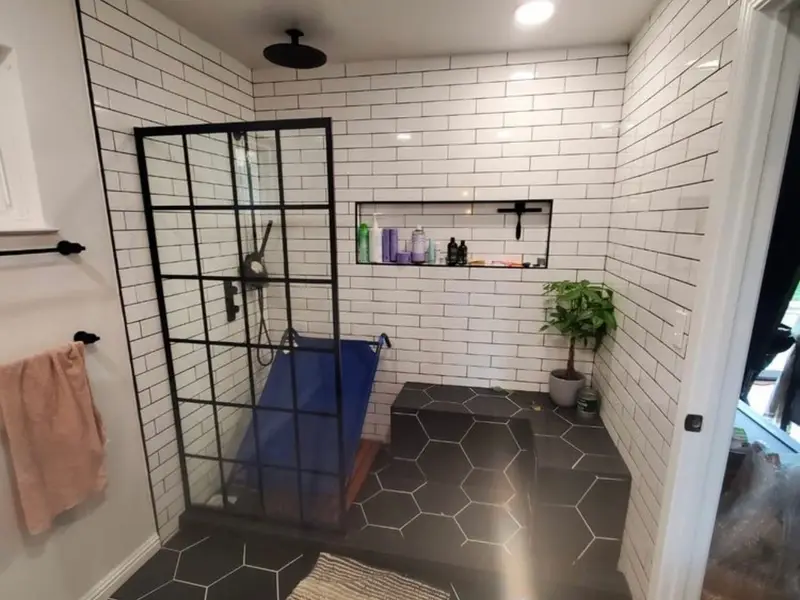
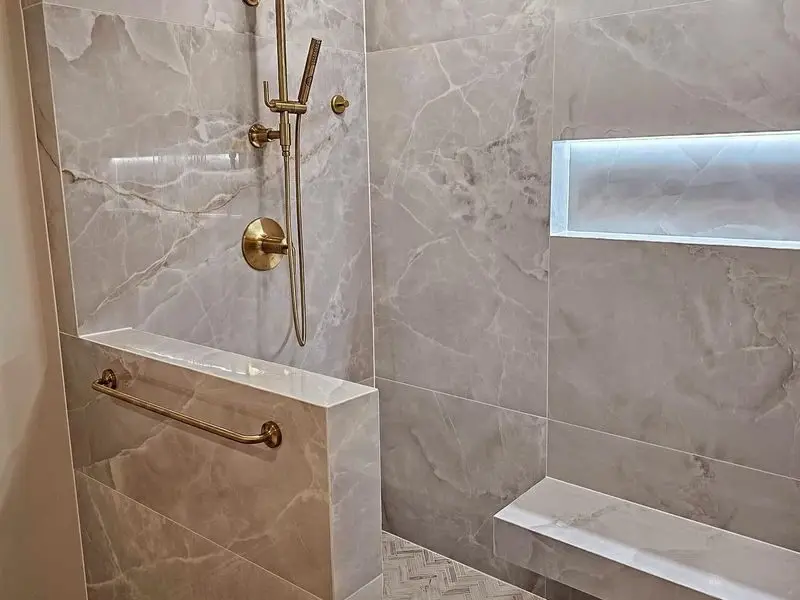
Selected bathroom remodels
4.8 on Google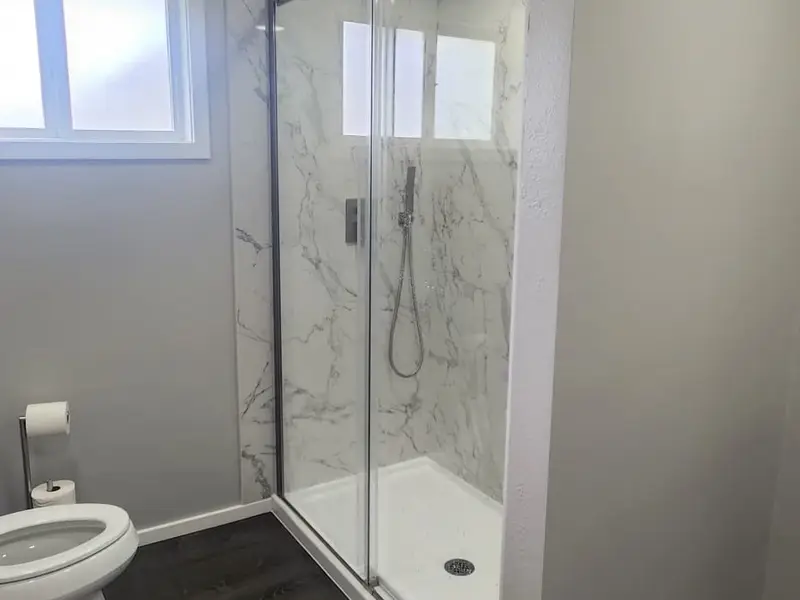
★★★★★Google review"his crew was fast, efficient and respectful."
★★★★★Google review"Alpha Dream Construction did an amazing job remodeling my bathroom!"
More bathroom, kitchen and outdoor projects are in the project portfolio.
Shower, Tub, Vanity and Tile: What a Bathroom Remodel in Los Angeles Covers
Bathroom remodeling in Los Angeles ranges from a new vanity and tile in the same layout to a full gut down to the studs. Four decisions shape every job:
Shower or tub
Trading a 5-foot alcove tub for a walk-in shower frees floor space and removes the step over the tub wall. A curbless entry needs the floor recessed or sloped toward a linear drain, which is planned at demolition, not at tile. Our tub-to-shower conversion guide walks through it.
Vanity and storage
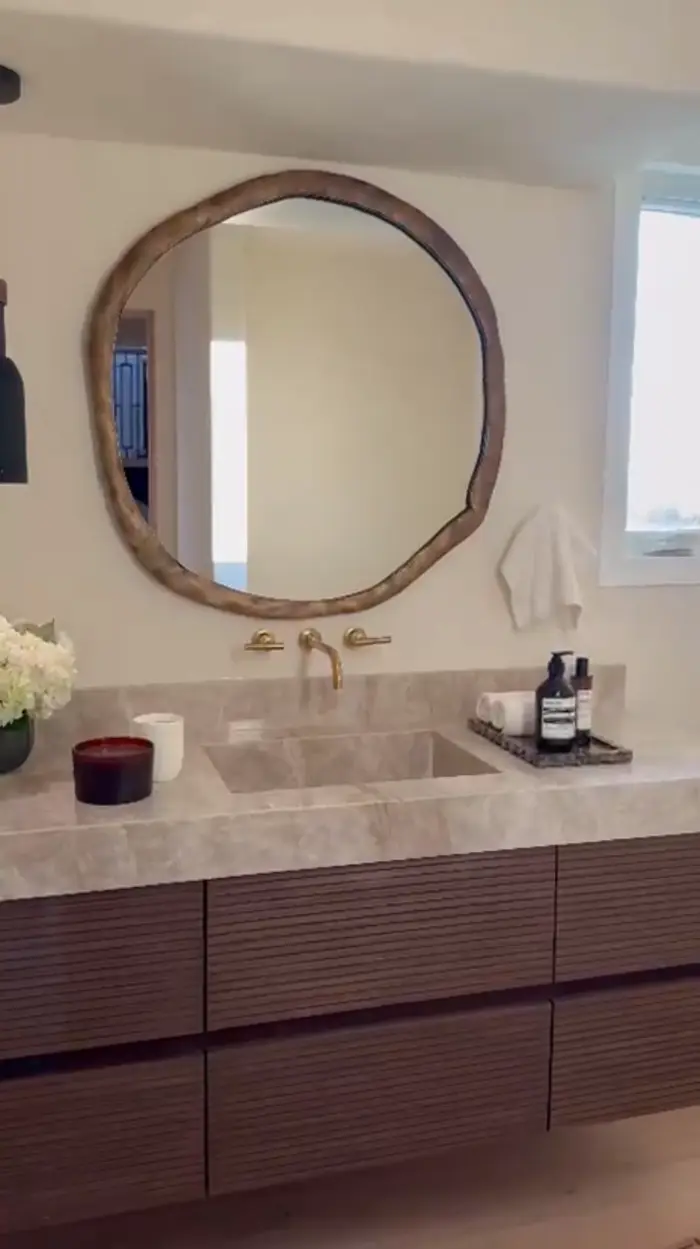
Wall-mounted floating vanities increase visible floor area, making smaller bathrooms feel wider; a double vanity needs a second drain and supply line. Recessed medicine cabinets and shower niches add storage without taking floor space.
Tile and surfaces
Large-format porcelain means fewer grout lines to clean; handmade tile and natural stone add texture but need sealing. Shower floor tile should be slip-resistant when wet.
Light and air
Layered lighting at the mirror and a humidity-controlled exhaust fan keep the room bright and dry, which protects the paint, grout and framing from moisture.
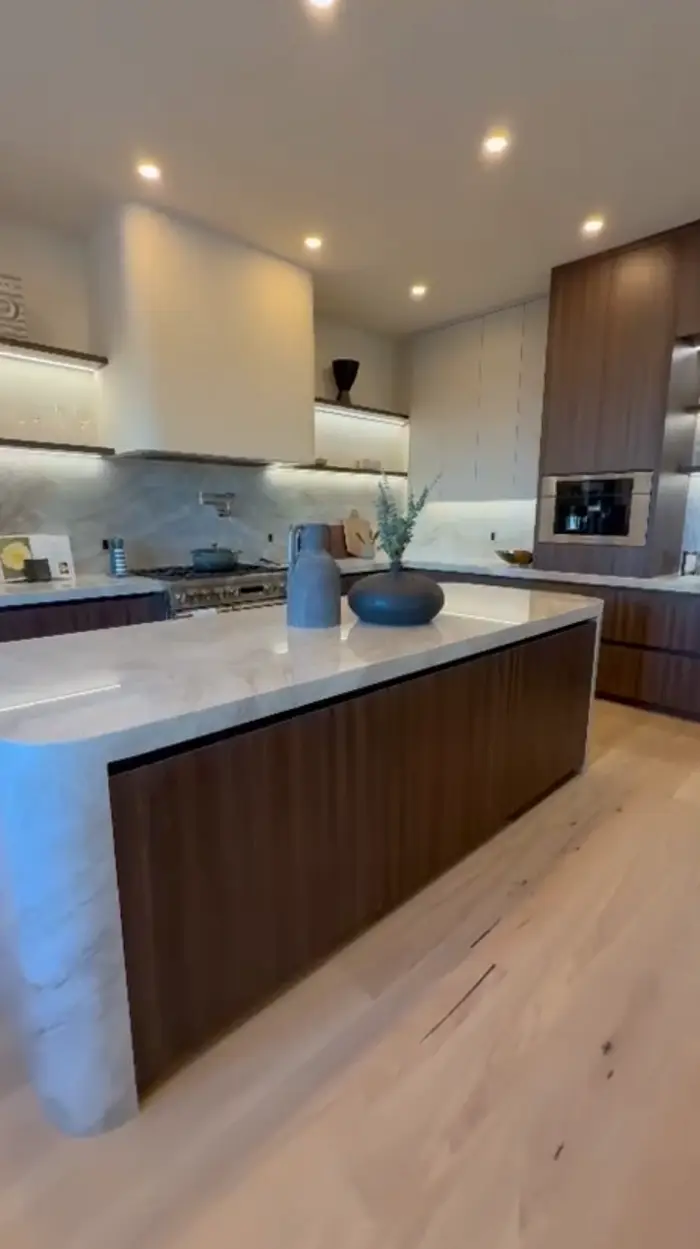
★★★★★"He really understood my vision and was able to see and imagine how my home would look after a full renovation including the kitchen, flooring, paint, and two bathrooms."
Luxury Bathroom Remodel Features and What Each One Needs
A luxury bathroom remodel adds features that look simple when finished but change the plumbing, the electrical or the structure behind them.
Curbless walk-in shower
Frameless glass and a linear drain give one continuous floor. The subfloor is lowered or sloped and the whole wet area is waterproofed, not only the shower pan.
Steam shower
Needs a steam generator with its own location and power, a fully sealed glass enclosure and a vapor barrier on walls and ceiling.
Heated tile floor
An electric heating mat is laid under the tile and wired to a thermostat on a GFCI-protected circuit, so it is decided before the floor goes down.
Freestanding soaking tub
A filled stone or cast tub is heavy, so the floor framing is checked, and the floor-mounted filler needs supply lines brought up through the floor.
Bathroom Remodel Permits in Los Angeles
In the City of Los Angeles, the Los Angeles Department of Building and Safety (LADBS) treats a residential bathroom remodel with no structural changes as an express permit, with no plan check. Replacing or adding plumbing fixtures, rewiring existing circuits and adding an exhaust fan are on the same express list.
Express permit
Same room and no structural changes: new fixtures, tile, vanity and fan, including the plumbing and wiring work behind them.
Plan check
Moving or removing a structural wall takes plans and structural details through LADBS plan check first.
Inspections
The inspector signs off the rough plumbing and electrical before the walls are closed, then the final once the fixtures work.
Other cities
Burbank, Glendale, Santa Monica, Pasadena and the cities of Orange and Riverside counties run their own building departments.
We manage your entire project from structural engineering and LADBS permitting to fine custom finish installation. For the water and energy rules a permitted bathroom has to meet, and the step-by-step LADBS path, read our Sherman Oaks bathroom remodel and LADBS guide.
The Bathroom Remodel Process, from Demolition to Final Inspection
Visit, design and selections
We start with a visit to your home. Layout, tile, vanity, glass and fixtures are then chosen and measured before anything is torn out.
Demolition to the studs
Old tile, tub and drywall come out. Framing and subfloor are checked for water damage and repaired before anything new goes in.
Rough plumbing and electrical
Drains, supply lines, valves, circuits and the fan duct go in, and the city inspector checks them while the walls are still open.
Waterproofing and flood test
Backer board and a waterproofing membrane or hot-mop pan go on the wet areas, and the shower pan is water-tested before a single tile is set.
Tile, vanity, glass and fixtures
Tile and grout, then the vanity and top, the toilet, the trim and the glass enclosure. The inspector signs the final once the fixtures work.
How Long Does a Bathroom Remodel Take?
A standard guest bathroom remodel generally takes 3 to 5 weeks of active site work, while a full primary suite renovation with custom tile and layout adjustments typically takes 4 to 7 weeks. Design, selections and the permit come before that.
What Drives the Cost of a Bathroom Remodel
A bathroom's price follows its scope. The main cost drivers are:
Moving the plumbing
Relocating a toilet or shower drain is easier on a raised foundation than in a concrete slab, which has to be cut and trenched.
Tub to shower
Removing the tub, building a new pan and adding frameless glass changes more than a like-for-like tub replacement.
Tile area and type
Floor-to-ceiling tile, large-format slabs, patterns, niches and benches all add material and labor.
Vanity and fixtures
A custom double vanity, stone tops and wall-mounted or thermostatic valves cost more than standard pieces.
What demolition finds
Rotted framing, a damaged subfloor or old pipes behind the tile are repaired before the new work goes in.
Our guide to what bathroom remodel costs depend on in Los Angeles explains each factor in more depth.
Bathroom Remodeling Questions
Is it necessary to move existing plumbing lines?
Not necessarily. Keeping toilets, sinks, and shower drains in their original locations reduces plumbing labor costs. However, if your current layout feels cramped, reconfiguring the layout is often a worthwhile investment to maximize usability.
Can we live at home while the bathroom is remodeled?
Yes, if the house has another bathroom you can use. The room being remodeled is out of service from demolition until the fixtures are reconnected, so a single-bathroom home needs a plan for those weeks.
Which areas do you remodel bathrooms in?
Our bathroom remodelers work across Los Angeles County, the San Fernando Valley, Orange County and Riverside County. To compare contractors first, see how to choose a bathroom remodeling contractor in Los Angeles.
Planning the kitchen too? See kitchen remodeling, or request a consultation for your bathroom.
★★★★★"David and his team did an amazing job!!"