
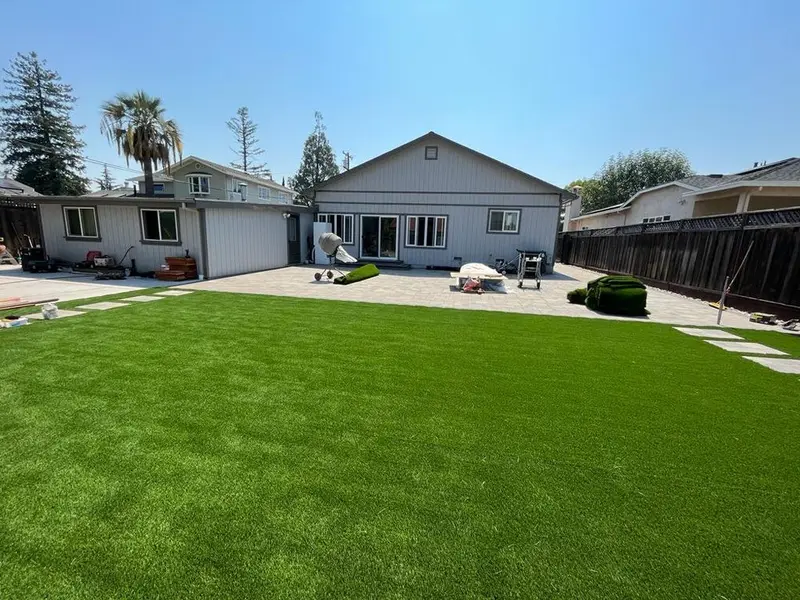
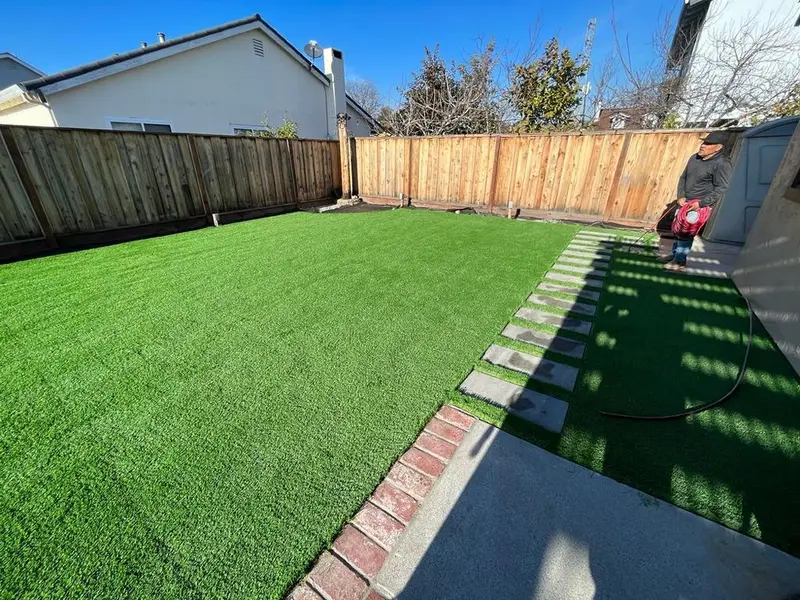
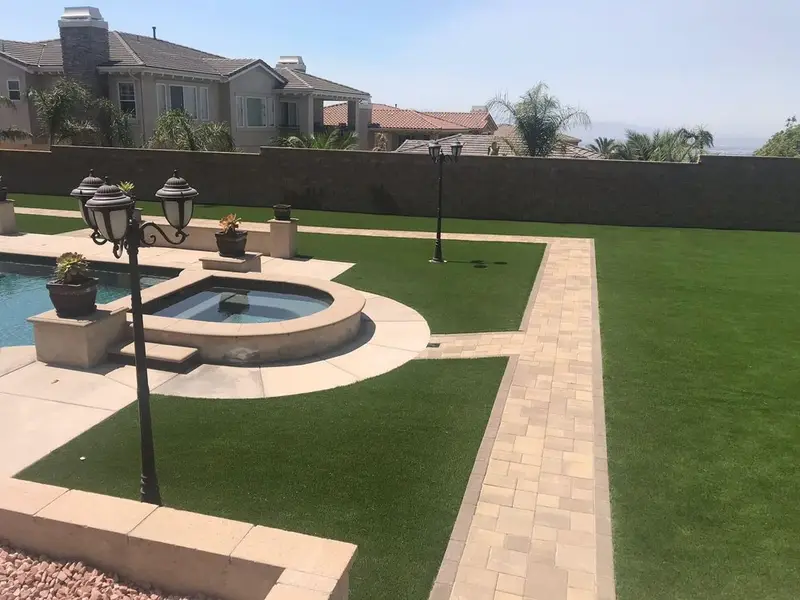
Recent backyard landscapes
4.8 on Google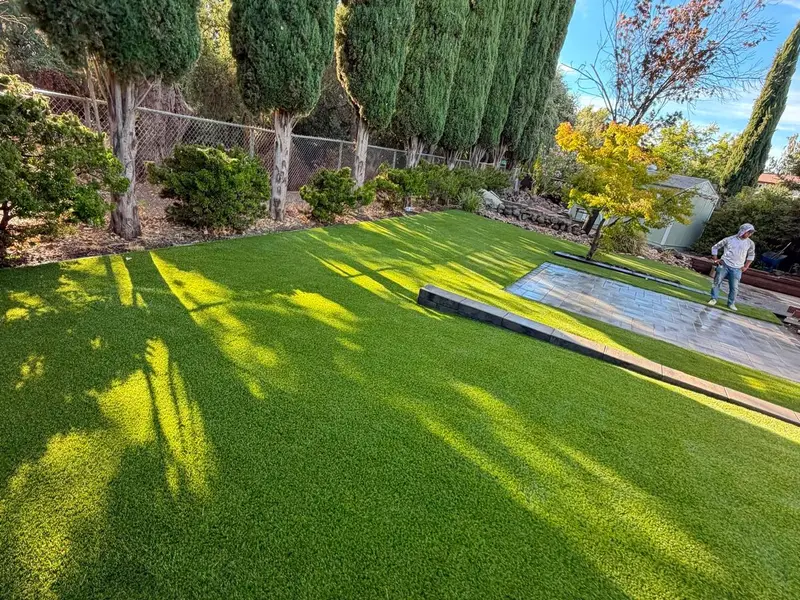
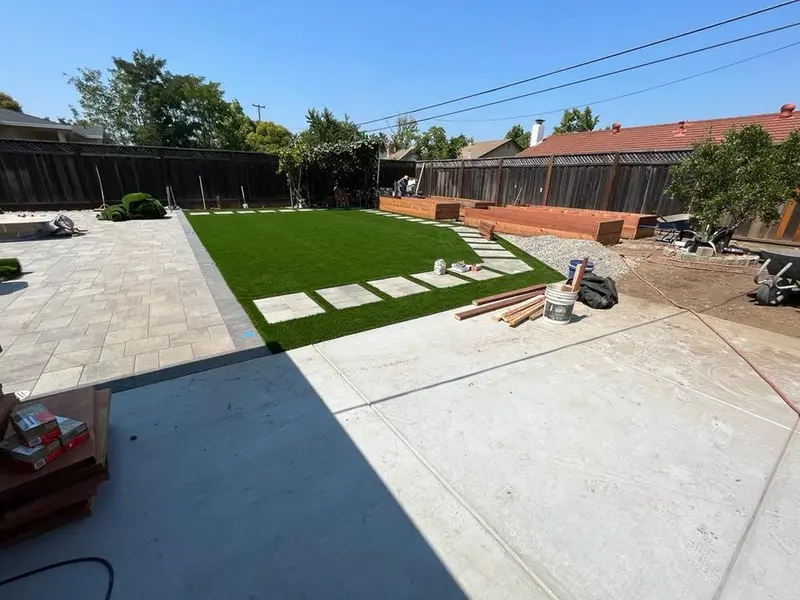
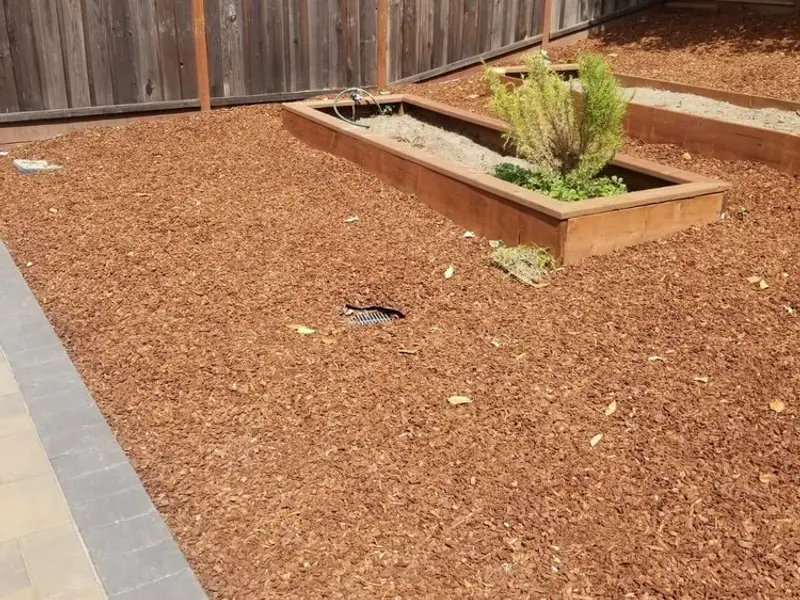
Landscaping Services We Install in Los Angeles
Grading and soil prep
Shaping the yard so surface water drains away from the house, as the 2025 California Residential Code requires (section R401.3, which cities can amend), before roots, turf base or pavers go in.
Artificial turf
A green surface without watering or mowing, laid over a compacted base. The turf replacement rebate excludes it (see the rules below).
Lawn
New sod or seed where you want real grass for play, on a sprinkler zone of its own so it does not overwater the beds next to it.
Planting and beds
Drought-tolerant shrubs, grasses and trees in edged or raised beds, finished with mulch or rock, like the mulched beds and raised planter in our projects.
Irrigation and lighting
Drip lines for beds, sprinklers for lawn and a controller by zone, plus path and step lights. Weather-based controllers and rotating nozzles can qualify for their own SoCal Water$mart device rebates.
Artificial Turf, Lawn or a Water-Wise Garden?
Most Los Angeles backyards end up with a mix: a green play area, planted borders and a patio. Here is how the ground covers compare.
Artificial turf
No watering, mowing or mud, and it stays green all year. In full afternoon sun it gets hot underfoot, and it does not qualify for turf replacement rebates.
Living lawn
Cool to sit on and good for play, but it takes regular watering, mowing, feeding and a working sprinkler system.
Drought-tolerant planting
Shrubs, grasses and groundcovers on drip, with mulch between them. This is the kind of garden the turf replacement program was set up to pay for, when its rules are met.
Stepping stones and paths
Pavers or flagstone set into turf or mulch give a route across the yard without a full patio, like the stepping stones in our projects. Patios, walkways and walls are part of our hardscape work.
Replacing a Lawn? Read the Rebate Rules First
The Metropolitan Water District runs a Turf Replacement Program on its SoCal Water$mart site, offered through participating water agencies that can add their own rules and funding. Its published rules shape the design, so they are worth knowing before any grass comes out.
Approval before removal
You must apply and receive an approval to proceed before you remove any turf. A project that has already started is denied.
Synthetic turf is not allowed
The program pays for a living, drought-tolerant landscape. Artificial turf is excluded, and so are concrete and other surfaces water and air cannot pass through.
What the new garden must include
At least 3 plants per 100 square feet of converted area, a stormwater retention feature, and no hardscape in that area except permeable paving.
Minimum size and local rules
If the property has more than 250 square feet of turf, at least 250 square feet must be converted. Each water agency can add its own requirements and funding.
If you want artificial turf in part of the yard and a rebate on another part, confirm the plan with your water agency before any work starts: synthetic turf is not allowed in a rebate project, and the area and rebate cannot be increased after pre-approval.
How a Backyard Landscape Is Installed
A typical backyard install runs in this order.
Clear and grade
Old lawn, roots and debris come out and the soil is shaped to fall away from the house. The 2025 California Residential Code (section R401.3) asks for at least 6 inches of fall in the first 10 feet; where walls or lot lines leave no room for that, drains or swales carry the water away instead. Cities can amend these rules.
Keep soil off the stucco
Beds and mulch along the house stay below the stucco weep screed, which the code places at least 4 inches above soil and 2 inches above paving (section R703.7.2.1), so the wall can drain and stay dry.
Irrigation and lighting lines
Drip and sprinkler lines, the controller and low-voltage lighting cable are laid before planting, so nothing is dug up later.
Planting, turf and finish
Plants go in at their spacing, turf goes down on its base, and mulch or rock finishes the beds before each irrigation zone is run and checked. For what each of these steps adds to the budget, see what landscape costs depend on.







Landscaping Questions from Homeowners
Is artificial turf good for dogs?
It can be, with a turf made for pets: a backing that drains quickly, an infill that does not hold odor, and a base that lets water through. Rinse the area where dogs go to keep it fresh.
Can you landscape a sloped yard?
We plant slopes; the low retaining walls and steps that terrace one are part of our hardscape work. A wall over 4 feet, or one holding back a slope above it, needs a permit (section R105.2).
What should I plant right next to the house?
Low plants on drip, kept back from the wall, with the soil graded away and below the weep screed. Heavy watering against the foundation is what the grading is meant to avoid.
How do I plan the budget for a new yard?
Start with what the yard needs before anything is planted: grading, drainage and irrigation, then the plants and surfaces. Our cost guide, linked in the install steps above, walks through each part.
New to planning a yard? Read what a landscape project involves and how to choose a landscape provider. When you are ready, tell us about your yard to book an appointment.