
Recent hardscape projects
4.8 on Google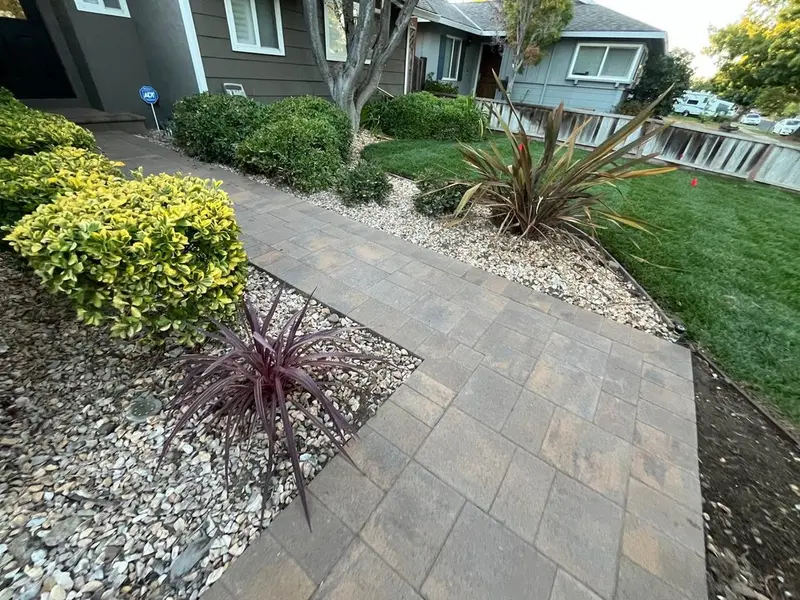
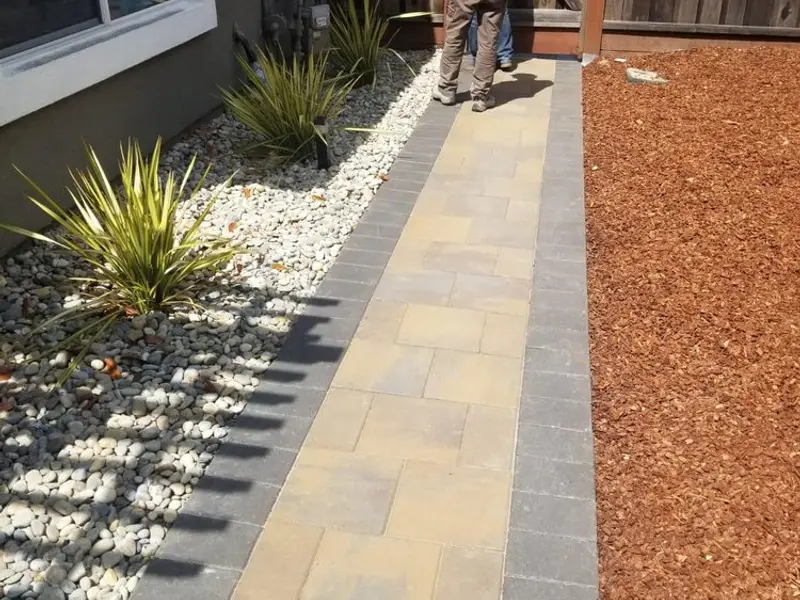
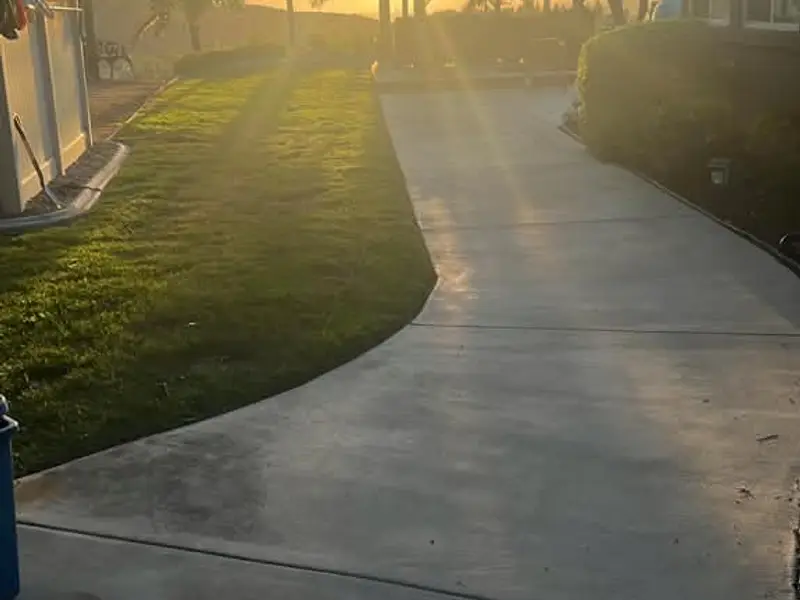
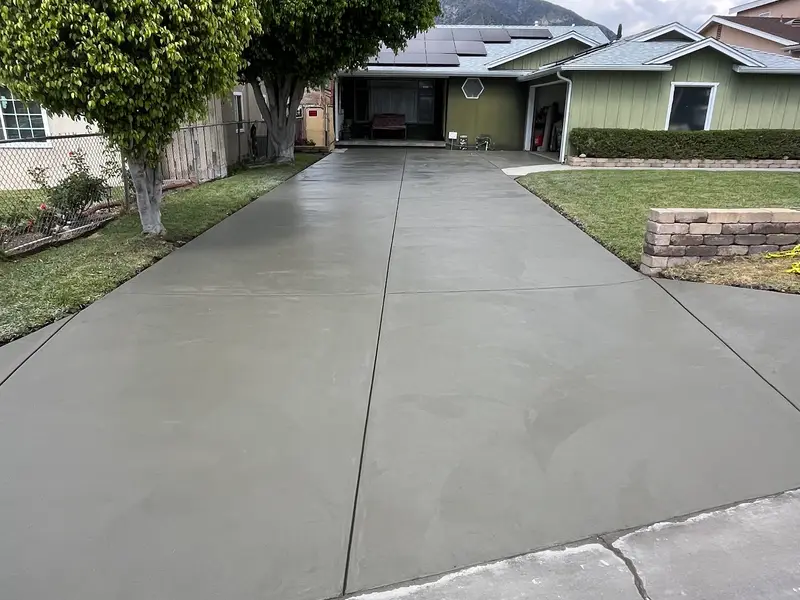
★★★★★Google review"The team did a fantastic job on my new concrete driveway."
What Hardscape Work Do We Build in Los Angeles?
Hardscape is everything in the yard that is built rather than planted: the surfaces you walk, park and sit on, and the walls that shape them. These are the kinds of hardscape we build.
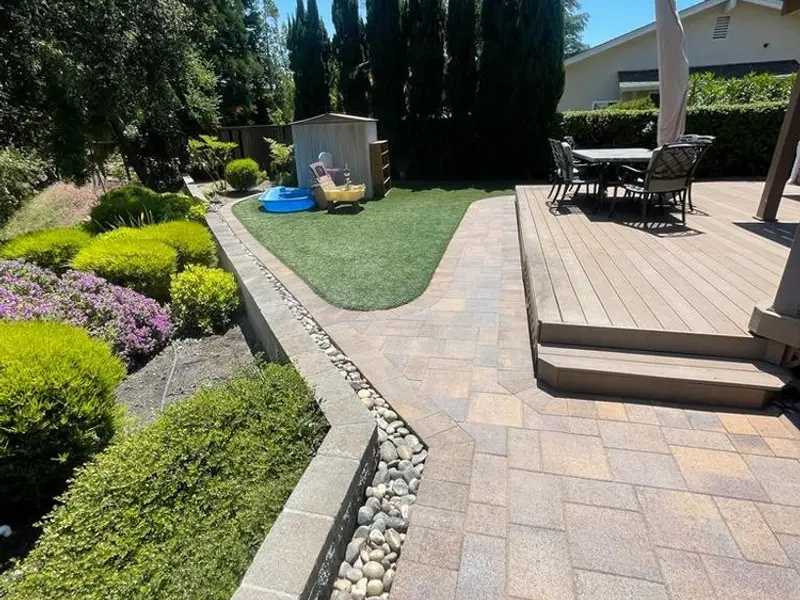
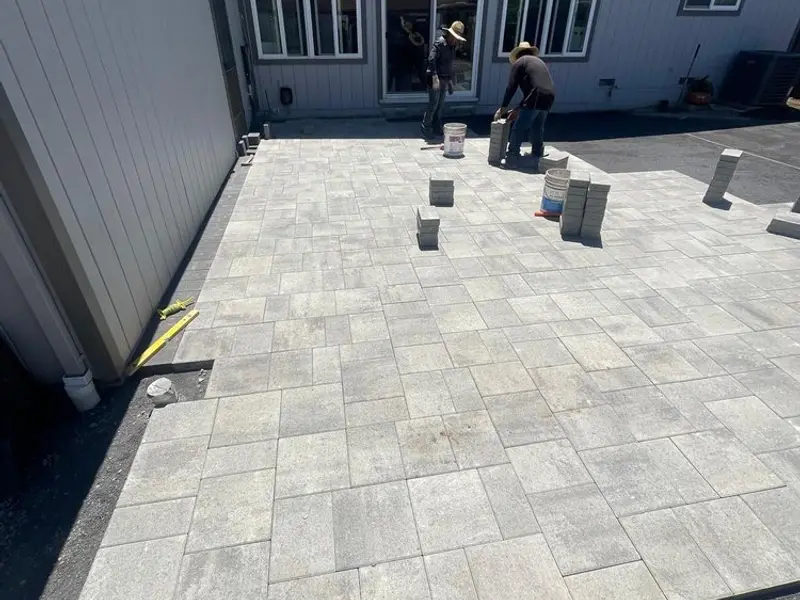
Paver patios
A patio is the floor of the yard. Interlocking pavers come in many colors, sizes and patterns, and because each unit can move a little with the soil, a paver patio does not crack the way a single slab can.
Concrete and paver driveways
A driveway carries the weight of cars every day, so it needs a deeper compacted base than a patio. Poured concrete gives one smooth surface; pavers let you lift and relay a section after a repair.
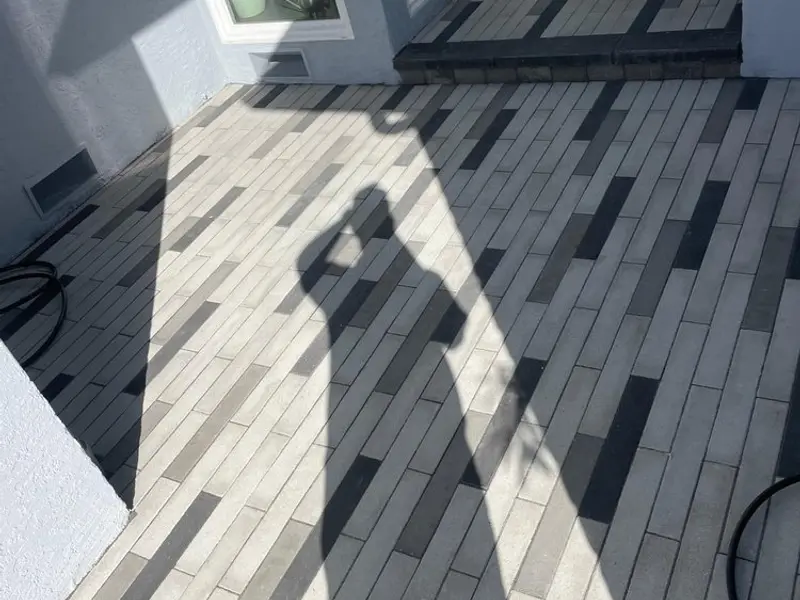
Walkways and side yards
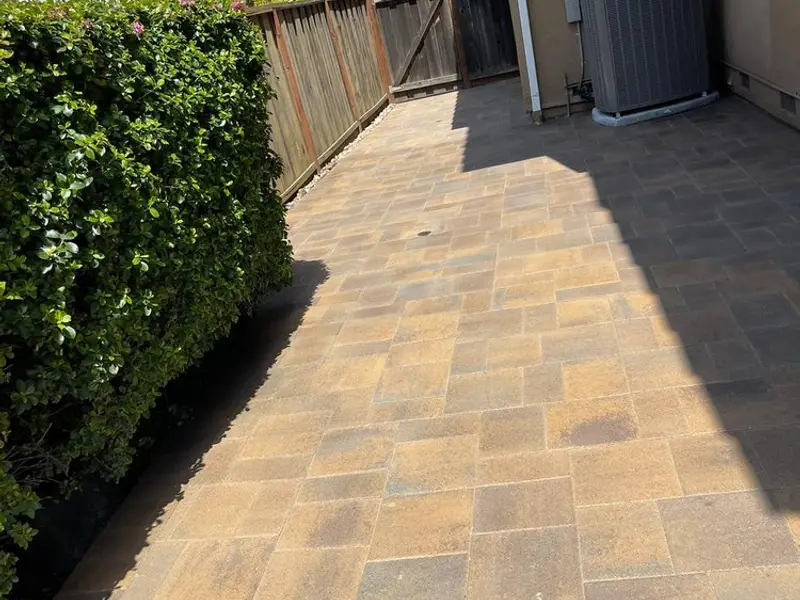
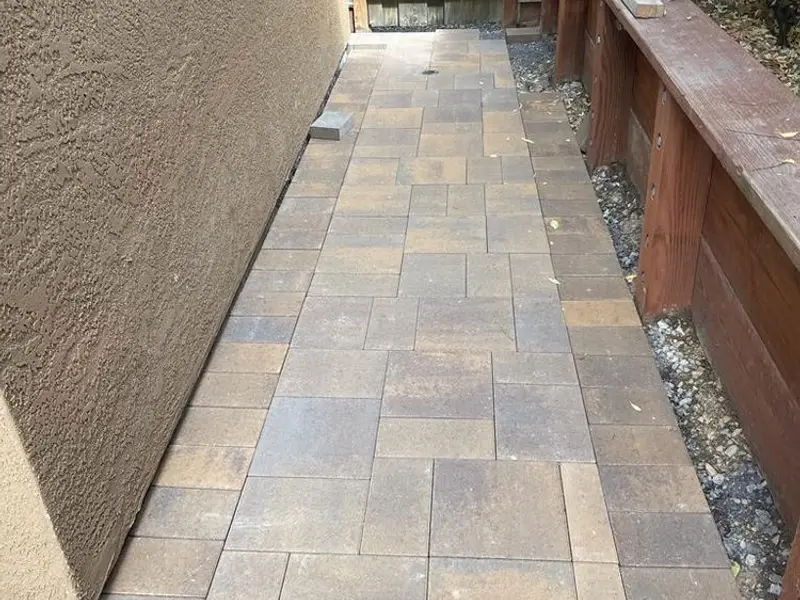
Side yards often hold the AC unit, meters and downspouts. A walkway there has to slope water away from the house, sit at least 2 inches below the stucco weep screed (CRC R703.7.2.1) and leave room to reach the equipment.
Retaining walls and seat walls
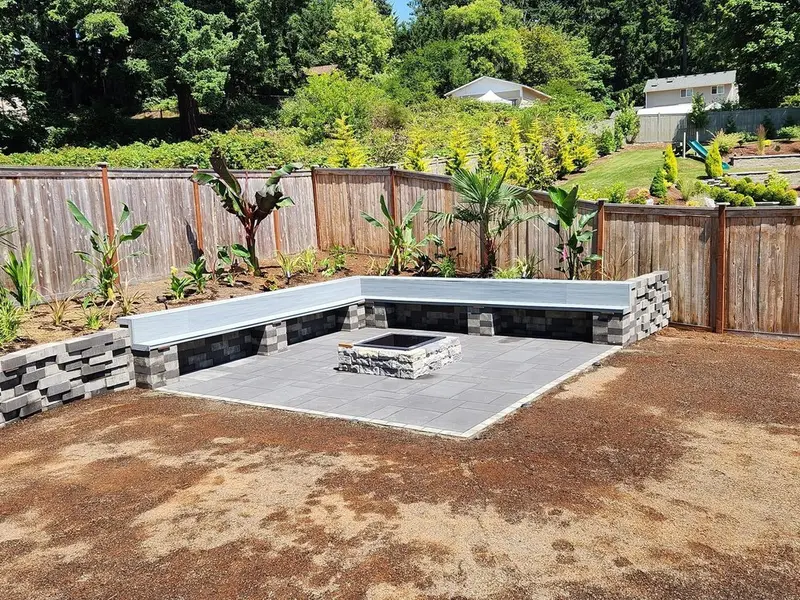
Block walls level a sloped yard, hold back a raised planter or double as seating around a patio. The wall's height and what it holds back decide whether it needs a permit.
Fire pits and outdoor living
A fire pit with a built-in seat wall turns a patio into a place to sit at night. For a grill, bar or full outdoor kitchen on the same patio, the gas and power lines need planning before the surface goes in.
Pavers, Poured Concrete or Natural Stone?
The surface decides how the space looks, how it wears and how easy it is to repair. Here is how the four common choices compare.
Concrete pavers
Factory-made units set on a compacted base and a bed of sand, held by edge restraints and joint sand. They suit patios, walkways and driveways, and a stained or broken paver can be swapped out on its own.
Poured concrete
One continuous slab with a broom, smooth, stamped or exposed-aggregate finish. Concrete shrinks as it cures, so control joints are cut in to tell it where to crack, along straight lines instead of random ones.
Natural stone
Flagstone, travertine or slate, laid on a base or set in mortar on a concrete slab. Every piece is different, which gives an older, garden look, and each one is fitted by hand.
Gravel and decomposed granite
Loose surfaces for paths, side yards and drainage strips. Rain soaks in instead of running off, and they pair well with drought-tolerant landscaping; they need a firm edge and an occasional top-up.
How Is a Paver Patio or Driveway Built?
Most of what makes a patio or driveway last is under the surface. After the design is settled, the build follows these steps.
Demolition and excavation
Old concrete, lawn and soil come out down to the depth the new base needs (deeper for a driveway than for a patio), and the debris is hauled away. This is also when roots, soft spots and buried lines show up.
Base and compaction
Crushed rock is spread in layers and each layer is compacted. A base that is too thin or loosely packed is what later shows up as sunken pavers or a cracked slab.
Grading and drainage
The base is shaped so water runs away from the house and toward a drain, a planter or the street. The California Residential Code (section R401.3) asks for hard surfaces within 10 feet of the foundation to slope at least 2 percent away from the building.
Surface and edges
Pavers are set on a sand bed, cut at the edges, held by edge restraints, swept with joint sand and compacted. Concrete is formed, poured, finished and cut with control joints while it cures.
Do You Need a Permit for Hardscape in Los Angeles?
Flat hardscape on your own lot usually does not need a building permit, but taller walls, work in the street and new utility lines do. The rules below come from the 2025 California Residential Code, which the City of Los Angeles and other cities adopt with their own amendments, so check the rules for your address before work starts.
Retaining walls
A wall up to 4 feet tall, measured from the bottom of the footing to the top of the wall, is exempt from a building permit unless it holds back extra load (a surcharge) such as a slope or a driveway above it (section R105.2). Taller or loaded walls need a permit.
Patios, walkways and driveways
Sidewalks and driveways are on the code's list of work exempt from a building permit. The exemption does not set aside the other rules: drainage away from the house and any homeowner association approval still apply.
Driveway approaches and curbs
In the City of Los Angeles, a new or rebuilt driveway approach, curb or public sidewalk is work in the public right-of-way. It needs an "A" permit from the city's Bureau of Engineering (LAMC 62.106.a), separate from the work on your lot.
Gas and electrical lines
A gas line to a fire pit or grill and a new circuit for lighting or outlets are regulated systems, and installing them needs a permit (section R105.1).
Outside the City of Los Angeles, in cities such as Burbank and Glendale and across Orange and Riverside counties, the local city or county building department applies its own version of these rules.
What Drives the Cost of a Hardscape Project?
Two patios of the same size can be priced very differently, because much of the cost depends on the lot rather than the surface.
Size, shape and pattern
Square footage sets the base, then curves, steps and patterns with many cuts, such as herringbone, add labor.
What comes out first
Breaking out and hauling away an old slab or driveway is heavy work, and a thick or reinforced slab takes longer to remove.
Soil, slope and drainage
Soft or clay soil and sloped lots need deeper excavation, more base, drains or a retaining wall before the surface goes in.
Access, permits and extras
A narrow side yard means hand work instead of machines. Permits for tall walls, gas lines and lighting add their own line items.
What to compare between hardscape quotes
The base
Ask how deep the excavation and the crushed-rock base will be, for the patio and for any driveway, and how it is compacted. A thin base can make a quote look lower and is impossible to see once the surface is down.
Drainage
Check that the slope away from the house, any drains and the hookup of downspouts are written into the scope, not left as extras once the old surface is out.
Edges, joints and finish
For pavers: the paver line and color, edge restraints on every open edge and the type of joint sand. For concrete: the finish, the control joint layout and any reinforcement.
Removal, permits and the license
Demolition, haul-away, permits and cleanup should each be in the price. Check the contractor's license on the CSLB website; ours is #1145233.
Planning the whole yard at once? Our guide to what landscape costs depend on covers the planting side of the budget.
More from our hardscape projects







Hardscape Questions from Los Angeles Homeowners
Are pavers or concrete better for a driveway?
Both last when the base is built for cars, so the choice comes down to look and repair. Concrete gives one smooth, continuous surface; pavers give a pattern and color, and a damaged or dug-up section can be lifted and relaid instead of cut out and patched.
Can pavers go over my old concrete patio?
Sometimes. If the slab is sound, drains well and there is room for the surface to rise at door thresholds and below the weep screed, thin pavers can be set over it. A cracked or sinking slab comes out first, because pavers follow whatever is under them.
Why does concrete crack, and can it be prevented?
Concrete shrinks as it cures and moves with the soil, so some cracking is normal. A well-compacted base, good drainage and control joints at the right spacing keep the cracks inside the joints and small.
Can you pave a narrow side yard?
Yes. Many of the projects on this page are side-yard walkways, where the work is done by hand around AC units, meters and fences, with a gravel strip along the wall so water drains away.
Do you also build the deck, patio cover and landscaping?
Yes. We build composite and wood decks, patio covers and landscaping, so one contractor plans the whole yard and the levels and drainage line up.
How do I take care of pavers or a concrete driveway?
Sweep and rinse the surface, and pull weeds from the joints while they are small. Refill joint sand where rain washes it out and clean oil spots on a driveway before they soak in. Sealing is optional: it deepens the color and resists stains, and is renewed when water stops beading on the surface.
Which areas do you work in?
Homes across Los Angeles County, including the San Fernando Valley, plus Orange County and Riverside County. Our office is at 5805 Sepulveda Blvd #500, Sherman Oaks.
To plan a patio, driveway or wall, call the number at the top of this page or send us your project details to book an appointment.